Showing posts with label Top 10 Creators. Show all posts

Sunday, September 18, 2011

3 More Lessons - The Wonders of Penny Arcade

NOTE - Over a year ago, I wrote a number of posts regarding my Top 10 Influences. Consider this to be the unofficial #11.

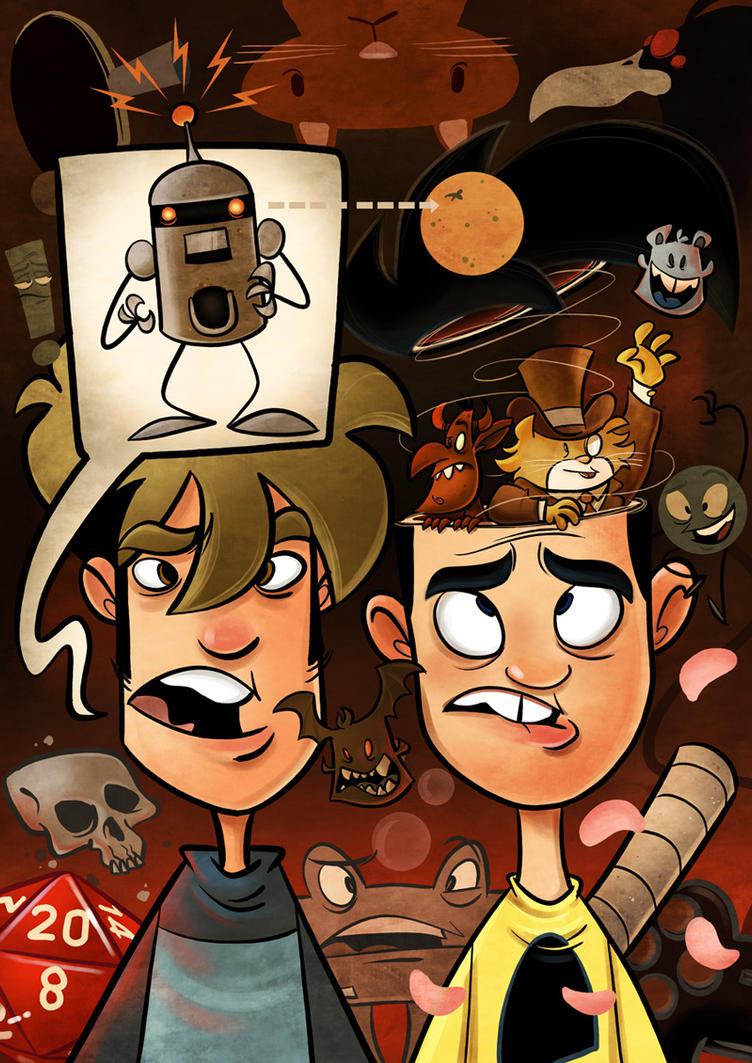
Penny Arcade, by Mike Krahulik
October 23, 2008
In 1998, Messrs. Jerry Holkins and Mike Krahulik debuted what has become the most successful webcomic to date. This is not hyperbole or opinion. This is fact. They have taken what had started as secondary content for an already established site and have turned into a cultural zeitgeist amongst a land of memes. One could say Penny Arcade did for the internet what The Simpsons did for television, but they would be wrong, if only for their lack of scope.


I could go on and on, about how they branched out into books, games (both digital and analog), conventions, a television network (does it still qualify as television if it is exclusive to the web?) and a full-blown charity that is so incredibly noble that it can actually rekindle a person's hope in humanity. Did you know they actually have their own line of clothing as well? I don't mean t-shirts here either. I mean an actual clothing line that is aimed at a specific market demographic.


Like I said, I could speak at length about the incredible kingdom they have created. However, that has already been touched upon in so many other forms, that it is pointless for me to retread on that ground. Furthermore, if you are reading this, then there is a good chance that you have taken more than one road-trip down the information superhighway, and have inevitably heard some mention of Penny Arcade. Instead, I want to talk about what Penny Arcade has done for the comics medium and what it has taught me.


ANOTHER NOTE - Before I continue, I want to establish some shorthand. From hence forth, Tycho shall refer to Mr. Holkins, Gabe shall refer to Mr. Krahulik, VG will be shorthand for video games, and PA will refer to the overall entity of Penny Arcade.


1 - Patience and persistence pays off, but don't be afraid to experiment
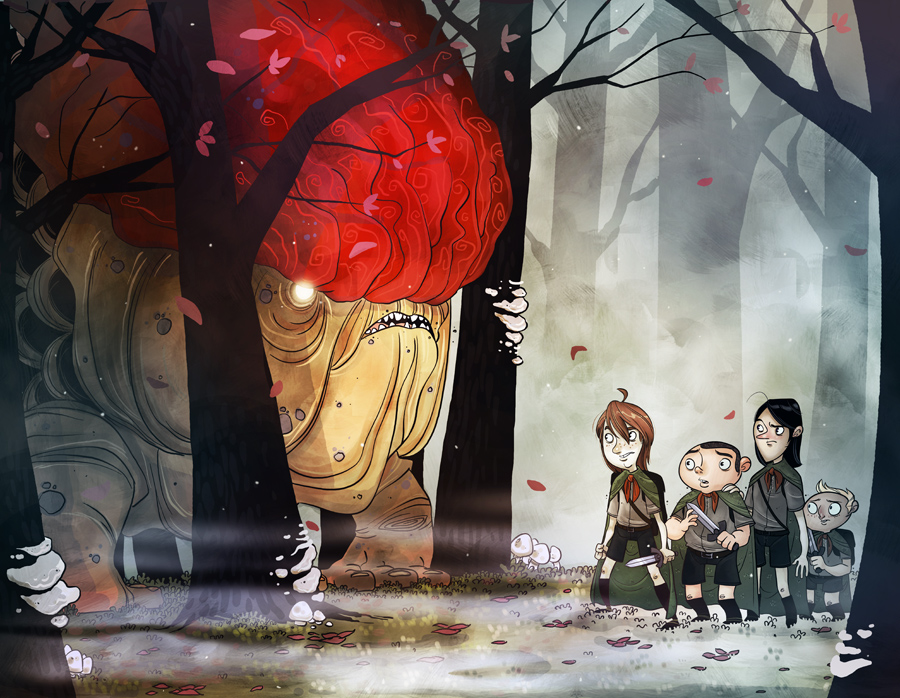
Lookouts, by Mike Krahulik - January 15th, 2010

Art does not sprout fully formed from the artist's head like a Grecian goddess, nor are artists born with an inherent talent or style. Everything that an artist produces that is aesthetically beautiful takes time and effort. Gabe is no exception.

If you take just a quick glance at the PA daily strip, and you may take for granted the time and effort that goes into it. It's not the hours of time Gabe spends drawing each strip, but rather the years of dedication that show up in every panel. The current look of the average PA strip took years to chisel out of nothing.

The original Lookouts strip
from June 10th, 2009
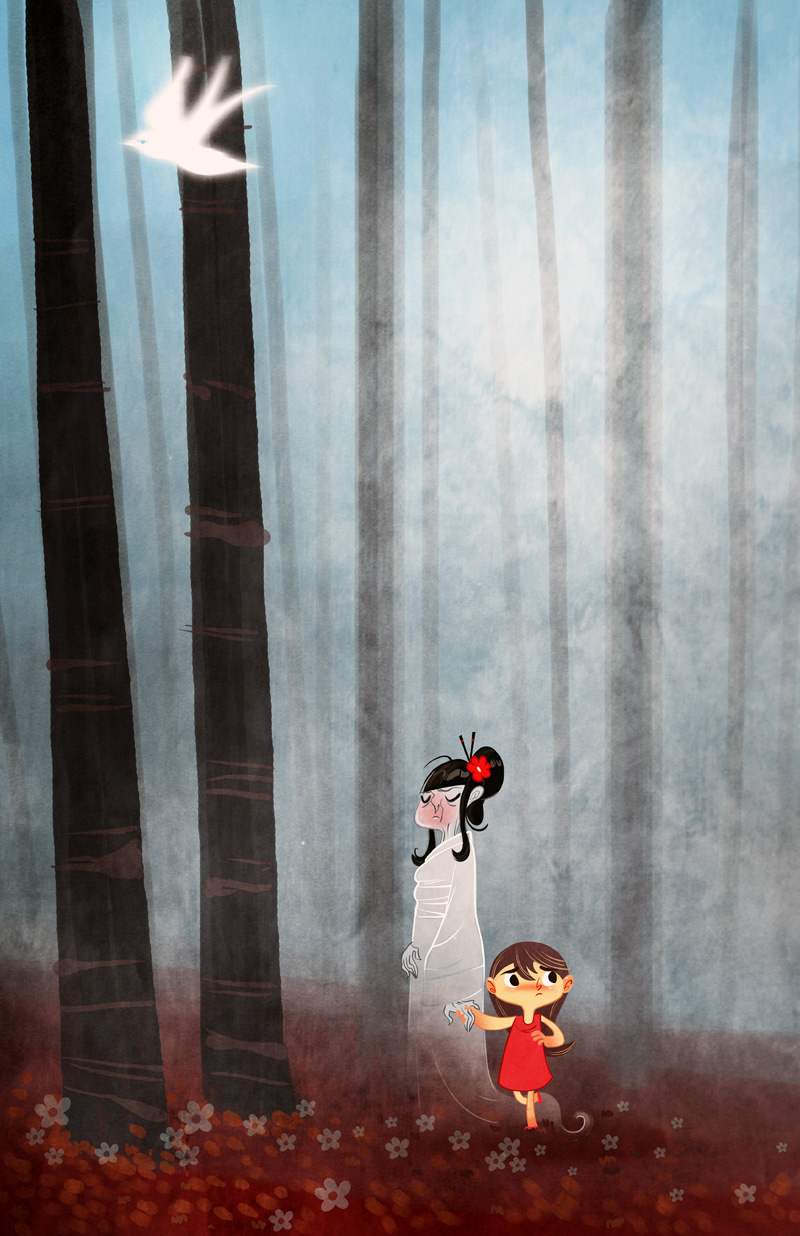
Even more impressive than Gabe's daily work are the occasional strolls down long-form narrative and solo pieces. In these, Gabe displays a keen eye that knows when to add and when to subtract detail. One of the most striking of these instances comes from the original Lookouts story from June 10th of 2009. In it, Gabe escapes the trappings of conventional, animated realism to exhibit a more etherial, impressionistic take on the background. With the loss of any solid backgrounds, swirling colors and strategically placed lines take the place of a definite setting, allowing for a world of simultaneous whimsy and worry.

The Girl and the Ghost, by Mike Krahulik
November 19th, 2009
These same traits can be found in an earlier piece called The Girl and the Ghost, from November 19th, 2008. In it, the same impression of a world found in The Lookouts is displayed in a more haunting fashion.

About a six months after the debut of the Lookouts, Gabe returns to the fertile forest playground with a solo piece that could easily be a fusion of the original strip and The Girl and the Ghost.


To often, artists can drown in the boredom of their style. Though some critics may balk  at an artist's shift, it is necessary for any creative person to breath and experiment, if for no other reason than to improve upon what they already produce. In the case of PA, I am thankful that Gabe takes the time to produce solo work, because without it, the adventurous, long-form jaunts, such as Lookouts and Automata, may not exist; and though I may wish to see more long-form narrative from Tycho and Gabe, I am more than happy to take what they provide over having nothing at all.
Automata, from
June 12, 2009

2 - Creating comics can be applied to the greater good


Growing up, I loved comics. The art, the action, the writing - I loved every aspect of the medium. What I loved most were the morality lessons that were found within the pages of X-Men and Avengers. X-Men taught me that people are people, and you shouldn't discriminate based on their differences. Avengers taught me that you must stand up for what you  believe is right, even if the opposition is bigger or more powerful. In essence, comics made me want to make a better world so much that I took the following, self-written oath, and still stand by it to this day: I SWEAR BY MY LIFE to change this world for the better!

In 2003, PA created Child's Play as a response to the fallacy of VG's influencing youth towards violent behavior, and I had just started college. Through intense study of writing and art, I had decided that comics were the alpha and omega of broadcasting ideas from one human to another. I was so convinced by this fact that it became the central thesis of my entire college education. By my senior year, with months left before graduation, I was infected by the same idealism that hits most college students earlier in their student career. I remembered my oath, and realized that I had been training myself all wrong. Imagine if Batman vowed to avenge the death of his parents by waging war on crime, and then four years later winds up with an art degree and no idea how to fulfill his goals because he was distracted by the shimmering allure of comics. To exacerbate an already embarrassing situation, I had just received a rejection letter from the internship I had foolishly banked the entirety of my future plans on. With graduation fast approaching, I had no idea what I was going to do after school. Instead of devising any concrete plans, I sat in my Computer Science class and gorged on PA.

Whether I had forgotten, never known, or just hadn't put the pieces together, PA had already created the solution to my problem. They had leveraged their success into actual charity. They weren't just giving money for others find solutions. They were giving money, raising money, and making the solutions themselves. In the case of Child's Play, they were raising money to purchase VG's and toys for the children's wards at hospitals to make what is a genuinely frightening play a little less scary for kids who had to be there.

By themselves, comics may not be able to cure diseases or stop wars. They can make the world a little less frightening through their own accord, but if used wisely, they can assist in collecting the resources necessary in stopping social ills and direct them towards the organizations that can.


3 - The future is nothing if not an echo of the past


One of the oft-overlooked cornerstones of PA is the commentary by PA co-creator Tycho. A person who has only read the comics themselves can be forgiven if they view PA as nothing but a series of dick-and-fart-and-VG jokes that can appeal to the masses. Inexcusable are critics who judge PA based on the jokes alone. To do so would be akin to calling Shakespeare or Mozart hacks because you believe the entirety of their work revolves around basal humor.


Tycho is a writer of immeasurable talent who is able to connect with the audience. Like Shakespeare or Dickens, he weaves the narrative of everyday life together with what the audience wants, with what the audience relates to. In fact, much like Dickens, Tycho is able to produce profusely on the perfunctory and still make you care. His interests aren't solely based in and around VG culture, but transcends the black hole of mass media and steeps itself in everything from Milton to Dungeons and Dragons.


What is a writer if his work doesn't resonate with the audience? The short answer is obsolete, but in reality, would they be a writer at all? Like all the writers of the past, Tycho could write to satisfy critics, but doesn't, because the critics aren't the target. He just writes like others breath. He, like Dickens, is the voice of the public; his words are a tapestry of the era.

Saturday, March 27, 2010

Neil Gaiman

#1 Neil Gaiman

Close your eyes and let your mind fall back into a pleasant slumber. Do you see the dark robed man standing ahead of you? He goes by many names: King Morpheus, Dream, the Sandman. Yet he has only one creator. Neil Gaiman.


I end this list of creators with a man who stands without a doubt to be one of the greatest storytellers of our generation.

Gaiman was born in England and grew up reading tales from the finest storytellers of the era; wordsmiths such as Lewis, Tolkien, Lovecraft, and Poe. He started his own writing career as a journalist, gradually moving his way into fantasy fiction, and then comics. Gaiman's first foray into comics came writing the critically lauded Marvelman series after contemporary comics mage Alan Moore decided to leave the series.

Yet, why is this writer at the top of this list? What has he done that is so great?


The short answer is "everything." I'm not saying that everything Gaiman has ever written is golden. Nor am I saying that his stories trump all others. To fully explain, let me continue on to the long answer.

Before there was art, there was story. Before there was writing, there was story. Story is such an inherent part of human nature, that it has evolved into other aspects, such as religion and politics. No religion would be anything without the mythological stories that fuel belief, nor would any politician get anywhere without control over what stories hit public ears. In many ways, story can be seen as what makes humans human.Without it, where would the creative spirit be?


So how does this relate to comics? Comics can be strictly an art medium, with people experimenting with form and function to deliver a new experience. Comics can also be a tool for education and information, conveying complex ideas in easy to understand biblio-visual narrative. Regardless of how you use comics, they are still a story-telling medium. Without the story, why would you need the art OR the words?


Neil Gaiman, from my perspective, understands this. To call storyteller a profession may be belittling it, because the role of story in humanity is so much more important to our cognitive and evolutionary development. Without stories, there would be no need for books, or films, or comics, or television. Even journalists and teachers would be out on the streets if story did not exist.Yet Gaiman writes with a mastery that allows you to both see the truth and mask it from you. His mercurial correspondence to the world dances fancily without losing any sincerity. His pen, alongside those of his peers, allows the world to continue its mechanical crawl towards singularity.


With that, let King Morpheus rule over this kingdom. Let the bishops proselytize and the politicians smile for the camera; for if they did not exist, something else would, because story rules us all.


Lesson Learned: Regardless of style or medium, story is king!

Bonus Lesson: Minnesota is just as good a place as any to make comic books.

Saturday, March 20, 2010

Jack Kirby

#2 Jack Kirby

I wish I could say that Kirby was an influence of mine from early on. Unfortunately, when I was a kid, I thought of him as an old, lower tier artist. It wasn't until college, when I started reading more about the creation and origin of comics that Kirby's glamor started to make any sense.


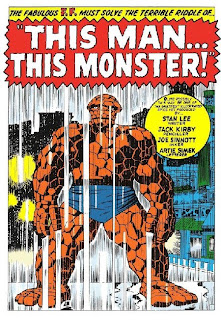
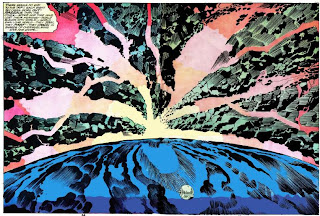
Kirby wasn't the best draftsman. If you wanted realism, Kirby was not your man. What he lacked in fidelity, he made up for in dynamic layout and fantastic spreads. Kirby didn't recreate life. Kirby reinvented life. He turned the boring and mundane into the bold and miraculous. His pages were crammed with more cosmic action and divine adventure than even modern cinema can recreate. To read but a panel is to get pulled into a wondrous world of of gods and monsters. The art from his hand is like a trap meant to capture the imagination.


Yet he wasn't an artist.

Jack Kirby did not view himself as an artist. Rather, he saw himself as a husband and a father, working to provide for his family. He would start at the top right corner of his drafting paper and draw until he reached the bottom left corner. He didn't work to create pieces of art, he worked to create a life for his family. In doing so, he was able to save the comics industry and reinvent it over and over again, over generations. Kirby was not obsessed with one particular genre of worked, but told stories that touched upon both the earth and the heavens. His street characters showed the grace of gods, while his gods possessed the fallibility of men. His influence can still be felts generations later amongst artists the world over.


Jack Kirby wasn't an artist.

He was a god among men who worked for the betterment of others.


Lesson Learned: Hard work and persistence pays off.

Saturday, March 13, 2010

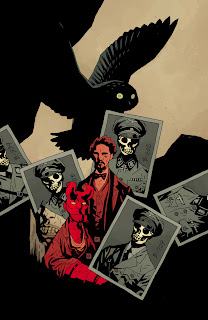
Mike Mignola

#3 Mike Mignola


I don't remember when it was exactly. I just remember sitting in bed, reading Wizard, seeing the cool guy with the trench coat and goggles.


Yes, I thought they were goggles. Many people did.

Regardless, it would have been years ago.

In those days, the only access to comics I had was via gas station magazine racks. They weren't found in my hometown gas stations either. Only on road trips with my family could I find comics. There was also a cardboard box filled with old comics given to me by an older kid who felt he had grown out of them. That was where the issue of Wizard came from: already a few years old by the time I read it. So really, Hellboy wasn't new. Hellboy wasn't exactly an established property like it is now, but it wasn't new. However, it was new to me. Probably the first non-superhero comic I was aware of, and I couldn't even page through it because what interstate gas station would have copies of Dark Horse comics.

It wasn't until years later, my freshman year in college. I had weaned myself off comics previously, but just like any habit, it found its way of getting back into my life. It was during this period that I was finally exposed to Hellboy. The first movie was going to be out in a few months, and Seed of Destruction already had the big sticker advertising that fact on the cover. Maybe I was a poser for reading a series because it was being made into a film, but in actuality, I wanted to uncover that mystery presented to me in my early adolescence. I wanted to find out what that trench-coated guy's deal was.

Spoiler Warning: Hellboy isn't wearing goggles. They're horn stubs, sanded down to prevent unnecessary goring.

***

Mike Mignola cut his artistic teeth drawing pages for the Big Two. At Marvel, he did projects like Alpha Flight and Rocket Raccoon. At DC, he was allowed to play with some of the higher profile characters, such as Batman in Gotham By Gaslight or Superman in Cosmic Odyssey.


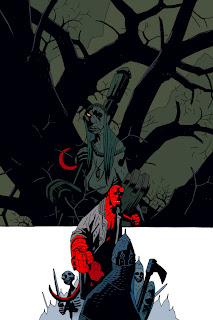
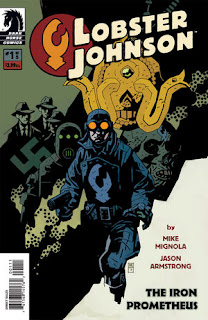
Yet Mike never felt entirely comfortable drawing these titanic characters. He grew up reading HP Lovecraft and Robert E Howard, and was more interested in folklore and ghost stories than masks and secret identities. Really, Hellboy was his dream project, and the fact that Dark Horse let him do it was a phenomenal break, considering how finicky an audience can be towards stories that are far removed from capes and criminals. But he did it. Mike made Hellboy. And people rejoiced. Later, Hellboy became a franchise, spinning off tertiary stories about Abe Sapien, the BPRD, and even the "mythical" Lobster Johnson.


***

At a time where many fans were growing ill of continuous exploration of the superhero expanse, Hellboy shone like a beacon in the dark. It acted as a sigil granting other artists the confidence to go ahead with their own stories, regardless of how lacking it was of spandex. What started out as a small, creator written and drawn story, has become a multi-tome epic that has not only spawned two feature length films, but also numerous spin-off books. Many artists, independent or otherwise, cite Mike Mignola and Hellboy as inspiration for their own titles. All of this, and it still continues to feel fresh with each new story arc.


Mike Mignola did not change his style of drawing to conform to industry standards. He did not write the same stories that had constantly been seen as best sellers. Mike Mignola went against the grain, and persevered. Mike Mignola did all this, and he was all the better for it.

Lesson Learned: Do what you want, and the fans will come to you.